
TCL SQD-Mini LED TV: 5 Powerful Reasons It Could Transform Premium TVs
The SQD-Mini LED TV technology is emerging as a potential next step in premium television displays as consumers demand larger screens, higher brightness, and better performance in everyday viewing environments. Announced in a statement dated October 28, 2026, in Lahore, the technology reflects a broader shift in the television industry, where manufacturers are looking beyond traditional OLED displays to address the demands of modern households.
For years, OLED has been a leading choice for premium televisions because its self-emissive pixels can switch off individually to produce deep blacks and exceptional contrast. However, brightness limitations, potential burn-in, and manufacturing costs at very large screen sizes have created opportunities for alternative display technologies.
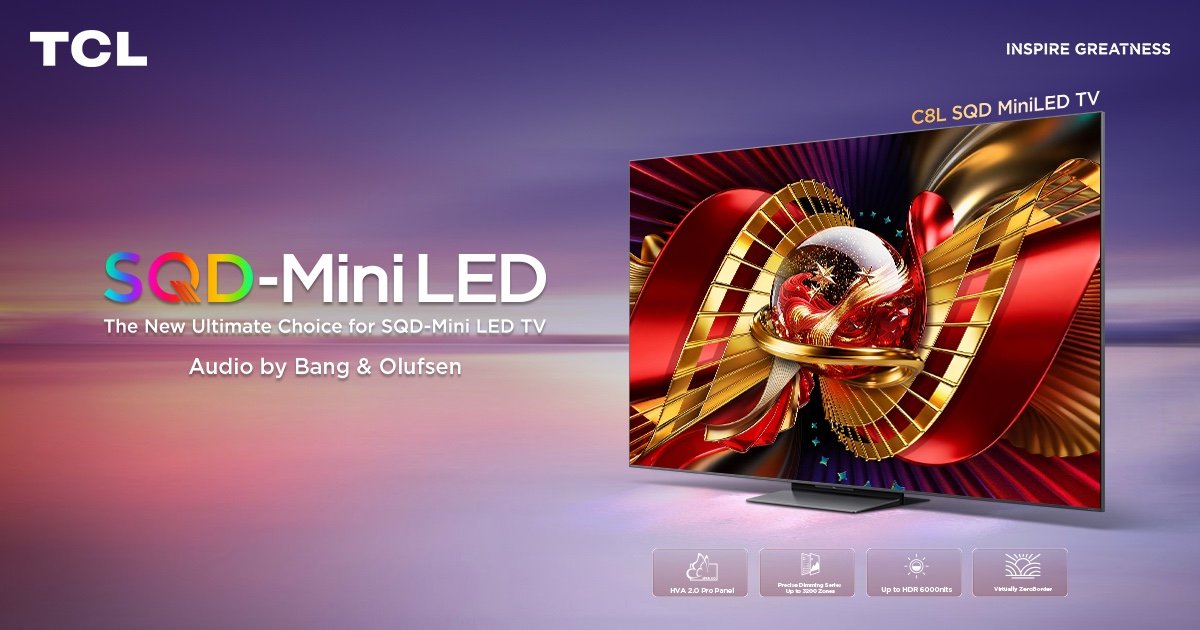
SQD-Mini LED combines quantum dot colour technology with Mini LED backlighting to address several of these challenges.
Why SQD-Mini LED TV Technology Matters
The growing popularity of large-screen televisions is changing what consumers expect from premium displays. Today’s TVs are used for streaming films, watching live sports, playing console games, and managing connected smart-home experiences.
These activities often take place in bright living rooms, where reflections and ambient light can affect picture quality. According to the announcement, SQD-Mini LED TV technology is designed to deliver high brightness, vibrant colours, and consistent performance across these demanding viewing conditions.
Unlike OLED, which uses organic materials to produce light, Mini LED televisions use inorganic LEDs as a backlight behind an LCD panel. This architecture can support high brightness levels and large screen sizes without the same organic pixel burn-in mechanism associated with OLED technology.
1. High Brightness for Brighter Living Rooms
Brightness is an important consideration for households that watch television during daylight hours or in rooms with substantial natural light.
The announcement highlights the limitations of OLED brightness in demanding environments and positions SQD-Mini LED as an alternative for viewers seeking a brighter picture. Mini LED backlighting allows manufacturers to control light across multiple zones, helping improve contrast while maintaining high brightness.
Actual performance will depend on the specific television model, its dimming system, and viewing conditions.
2. Quantum Dots for Richer Colours
Quantum dot technology enhances colour reproduction by converting light into more precisely defined colour ranges. Combined with Mini LED backlighting, it can help televisions produce vivid images while maintaining brightness.
TCL’s Super QLED development programme, described in the announcement, represents part of the company’s work to advance quantum dot display performance.
For viewers, the goal is a more engaging experience when watching films, sports broadcasts, and other content with demanding colour requirements.
3. Greater Potential for Large-Screen TVs
Large-format televisions, particularly 85-inch and 98-inch models, are becoming increasingly important in the premium segment. However, manufacturing costs can rise significantly with OLED panels at these sizes.
The announcement identifies manufacturing efficiency as a key advantage of SQD-Mini LED. Because Mini LED technology relies on inorganic backlighting, it offers a different production pathway for scaling premium televisions to larger dimensions.
This could help manufacturers address growing interest in large-screen TVs while balancing performance and production costs.
TCL CSOT’s Long-Term Display Strategy
TCL CSOT has developed Mini LED-capable panel production lines since 2019, according to the announcement. Its earlier products, including the X10, X925 Pro, C935, X11K, and X955, served as successive development platforms.
The company says the 2024 X11K achieved 6,500-nit HDR performance, helping validate the backlighting architecture that informed its Precise Dimming Series. Its quantum dot research also contributed to the development of Super QLED technology.
TCL CSOT’s manufacturing scale, including its reported global leadership in production of panels measuring 85 inches and above, provides an industrial foundation for developing large-format displays.
Why SQD-Mini LED Could Gain Ground in Pakistan
Pakistan’s television market is seeing growing interest in larger screens, with the 75-inch-and-above segment identified in the announcement as the fastest-growing category. Consumers increasingly expect one television to support cinema-quality streaming, live sports, gaming, and smart-home connectivity.
SQD-Mini LED TV technology could appeal to these buyers through its combination of high brightness, quantum dot colour reproduction, and large-screen manufacturing potential.
The announcement also claims that the technology offers twice the lifespan of OLED and eliminates burn-in risk associated with organic pixels. These claims should be assessed against independent testing and the specifications of individual models.
Conclusion
The development of SQD-Mini LED TV technology reflects changing expectations in the premium television market. By combining Mini LED backlighting, quantum dots, and large-screen manufacturing capabilities, TCL aims to address important consumer priorities, particularly brightness, colour performance, and durability.
As demand for bigger televisions grows in Pakistan, SQD-Mini LED could become an increasingly relevant alternative to OLED. Its ultimate success will depend on real-world picture quality, product pricing, and how effectively manufacturers translate the technology’s potential into consumer benefits.






One Comment