









Teach the World Foundation demonstrates solar-powered digital microschool model on International Literacy Day 2026
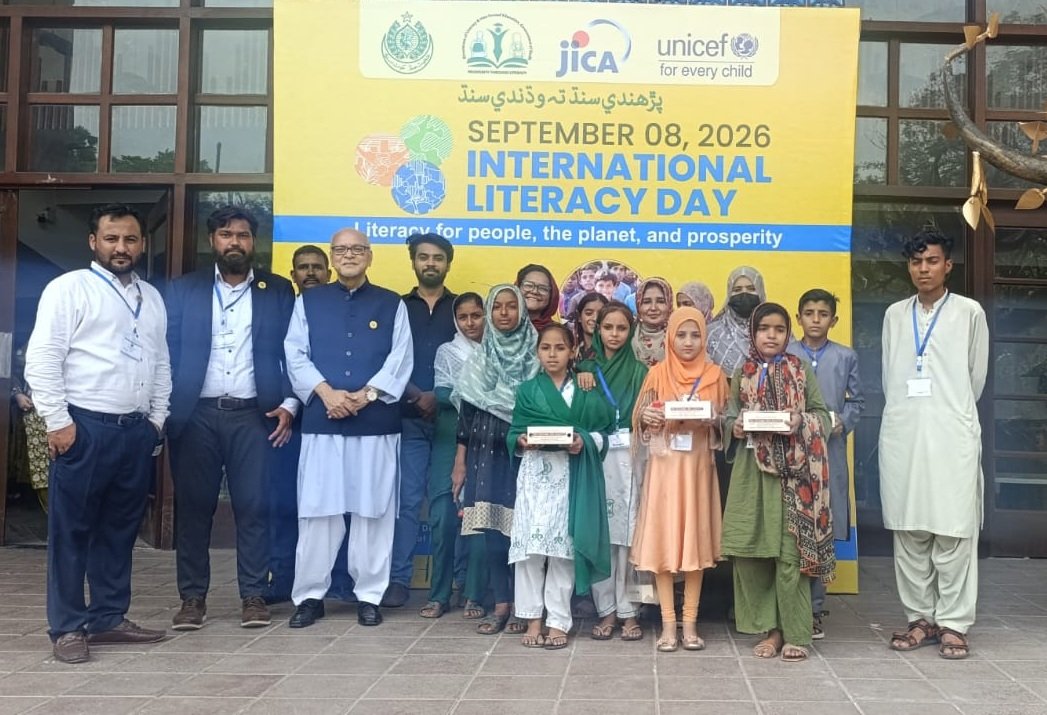
Teach the World Foundation (TTWF) marked International Literacy Day 2026 by showcasing its live Digital MicroSchool model at the Arts Council of Pakistan, Karachi.
The interactive classroom demo was a key feature at the flagship event hosted by the Directorate of Literacy and Non-Formal Education, School Education & Literacy Department, Government of Sindh. Aligned with this year’s official theme, “Literacy for People, the Planet and Prosperity,” the event convened government leaders, development partners, educationists, and civil society organisations to highlight scalable solutions for inclusive, sustainable education.
TTWF’s specially designed demo area recreated a fully functional digital non-formal learning space, giving visitors a first-hand view of how out-of-school children gain foundational literacy and numeracy using software-equipped tablets, interactive gamified content, and guidance from trained local facilitators. To address persistent infrastructure challenges, the entire setup was operated using TTWF’s mobile solar power unit. This demonstrated that high-quality digital learning can continue seamlessly in off-grid or power-deficient communities while maintaining an environmentally responsible approach.
Arshad Anis, President of Teach the World Foundation, emphasised the need for practical innovation in underserved areas, stating, “With millions of out-of-school children across Pakistan, we cannot afford to rely on traditional solutions alone. Platforms like the International Literacy Day event by the Sindh School Education Department are vital for driving actionable solutions. Our Digital MicroSchool model offers the immediate, scalable framework Pakistan needs—bringing quality learning directly to underserved communities and bridging the gap toward formal schooling.”
Designed specifically to combat Pakistan’s growing education crisis, where 3 in every 10 children are deprived of access to a formal education system, TTWF’s Digital MicroSchool model relies on compact community spaces where tablets loaded with adaptive software make learning engaging for young students. Locally recruited facilitators are trained to guide the children, while flexible daily shifts allow a single location to serve multiple student cohorts. By combining clean mobile solar energy with digital tools, the Foundation continues to work alongside public institutions and global development partners to expand access to meaningful basic education worldwide.