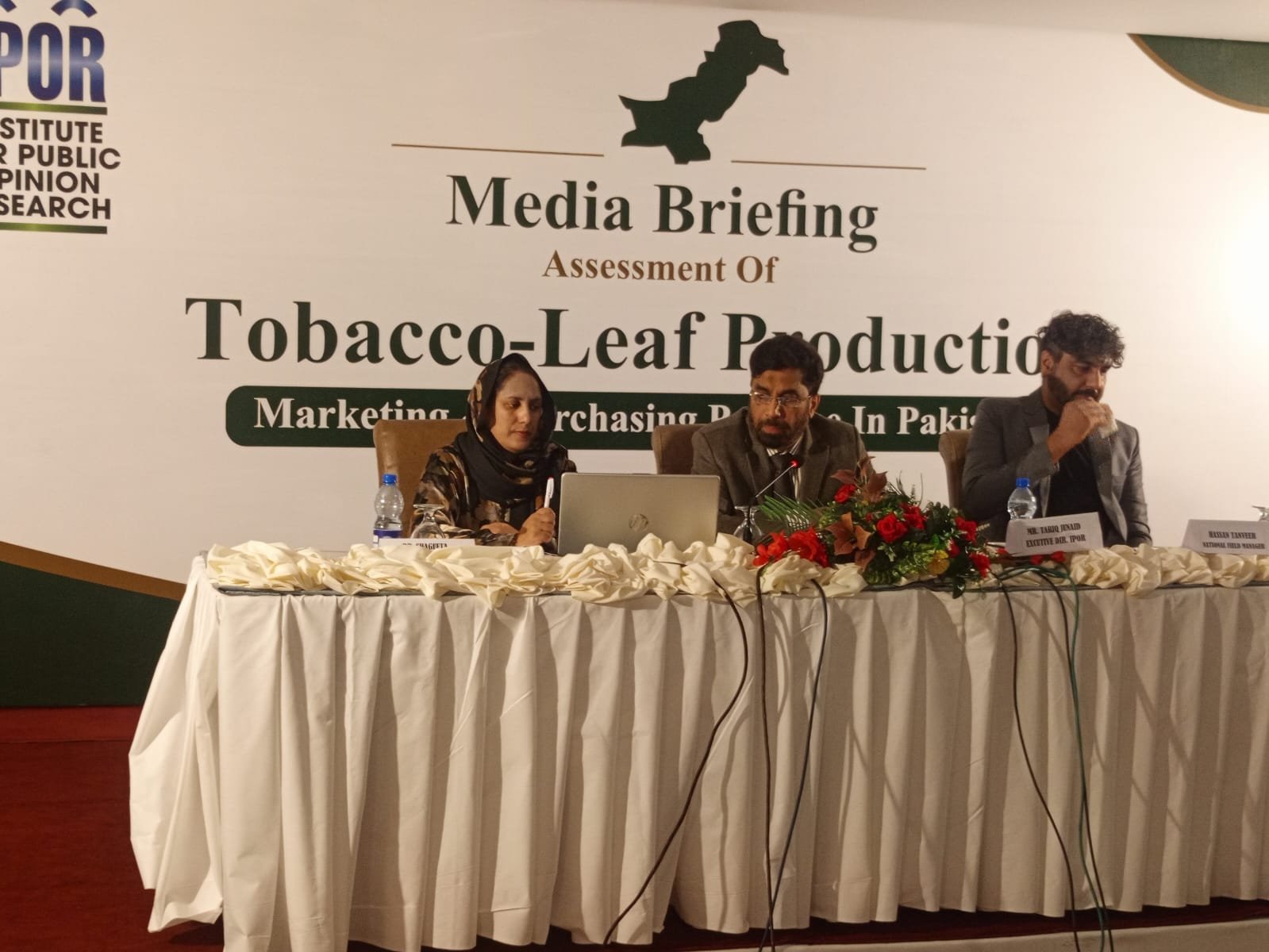
IPOR Tobacco Study: Shocking Compliance Gaps Revealed Among 1,200 Farmers
ISLAMABAD: A new IPOR tobacco study has highlighted significant gaps in compliance with Pakistan Tobacco Board (PTB) regulations. The Institute for Public Opinion Research (IPOR) says unregulated purchasing practices raise concerns about leakage into the illicit tobacco supply chain.
What the IPOR Tobacco Study Looked At
The study is titled Assessment of Tobacco-Leaf Production, Marketing and Purchasing Practices in Pakistan. It surveyed 1,200 tobacco farmers across Swabi, Mardan and Charsadda, examining purchasing arrangements, pricing, payments and regulatory compliance.
Under the existing PTB framework, tobacco purchases are subject to government-notified weighted average price requirements, which protect farmers. Companies and dealers must also fulfil their announced purchasing quotas, including any additional surplus quantities assigned by the PTB.
Gaps Between the Rules and the Market
The findings show a considerable gap between the framework and what happens in practice:
- 45% of farmers had no written purchasing agreement before planting
- 52% sold to buyers with whom they had no direct written agreement
Price Differences
The study also found large price disparities. Farmers selling to multinational tobacco companies received an average of PKR 720 per kilogram. Other companies paid PKR 559, and dealers paid just PKR 471.
Among farmers who struggled to sell outside formal agreements, 85% said they were offered prices below the official PTB price.
Payment Practices Raise Further Concerns
Among farmers selling through non-contracted arrangements, 52% reported receiving cash payments, and 36% were paid on the spot. According to the study, these practices weaken transparency and traceability, because tobacco is bought directly without being brought to buying depots.
The study says this points to a parallel grey system operating beyond the PTB’s oversight. With the government working to curb illicit tobacco trade, gaps at the start of the supply chain risk undermining enforcement and letting tobacco leaf enter undocumented channels.
What IPOR’s Executive Director Said
Tariq Junaid, Executive Director of IPOR, said:
“The issue is the gaps in compliance with the regulatory framework governing tobacco purchasing. When tobacco is traded outside formal agreements through third-party buyers, farmers face greater uncertainty and the risk of receiving prices below those prescribed by the Pakistan Tobacco Board. Stronger enforcement of existing regulations is essential to address these gaps.”
What Farmers Want
The study found that 62% of farmers named more purchasing agreements or higher procurement quotas from multinational companies as the most important improvement. That shows a clear preference for structured, regulated arrangements.
Junaid added:
“Greater accountability of buyers, stronger oversight of purchasing quotas and improved access to formal agreements are critical to safeguarding farmers’ interests and ensuring a fair and transparent tobacco market.”
Final Thoughts on the IPOR Tobacco Study
The IPOR tobacco study recommends better compliance with existing PTB laws and regulations. It calls for more accountability across all purchasing channels, better traceability of transactions and a more transparent, regulated market that protects both farmers and government revenue.